

The weight-loss drugs didn’t just shrink waistlines — they rewired how a country shops, eats, trains and thinks about health.
A few years ago, GLP-1 medications were a diabetes treatment most people had never heard of. In 2026, they are a cultural force. Semaglutide and tirzepatide — sold under names like Ozempic, Wegovy, Mounjaro and Zepbound — have reshaped not only individual bodies but the way an entire country shops, eats and exercises. What began as a pharmacological story has become a lifestyle one.
The scale of adoption
The numbers explain the phenomenon. Roughly 12 percent of U.S. adults now report having used a GLP-1 medication, up from about 5.8 percent in early 2024 — a near-doubling in around 18 months, amounting to something like 10 million Americans in 2025 alone. About 78 percent of users now take the drugs primarily for weight loss rather than diabetes, a share that has climbed sharply. Women are roughly twice as likely as men to be current users, and usage peaks among adults aged 50 to 64. Prescriptions written specifically for obesity rose an extraordinary 587 percent between 2019 and 2024.
A market — and prices — in flux
The economics are staggering. The global GLP-1 market is projected to reach around $200 billion annually by 2030, and Novo Nordisk, maker of Ozempic and Wegovy, saw revenue climb to $31.1 billion in 2024 from $11.9 billion just two years earlier. Access, long the biggest barrier, is shifting fast: Wegovy’s list price, around $1,349 a month, is set to drop to $675 at the start of 2027, direct-pay programs have advertised prices as low as $149 a month, and a Medicare bridge program offers eligible patients roughly $50 a month. As prices fall, projections put U.S. users at 25 to 30 million by 2030.
The supermarket reshuffle
Perhaps the most visible cultural effect is at the grocery store. As the national obesity rate ticked down from about 39.9 percent to 37 percent, food companies scrambled to adapt to customers who simply eat less and crave differently. Winners have included high-protein snacks, yogurt, produce, sports drinks and zero-sugar sodas; losers have been sugar-laden products, high-fat dips and dressings, and alcohol. Industry analyst Sally Lyons Wyatt of Circana has urged the food business to treat the shift as ‘an “and” moment and an opportunity’ — a prompt to reformulate around protein and longevity rather than a crisis to weather.
The muscle problem
The most important health conversation around GLP-1s in 2026 is not about fat but about muscle. Studies indicate that up to 40 percent of the total weight lost on high-efficacy GLP-1 drugs can be lean body mass rather than fat — a serious concern, especially for older adults, given that roughly one in three people over 60 already show signs of sarcopenia and aging muscle resists rebuilding. Clinicians increasingly recommend that patients pair the drugs with resistance training two to three times a week and elevated protein intake of about 1.2 to 1.6 grams per kilogram of body weight, and some suggest baseline body-composition scans. Notably, major bodies like the Endocrine Society had not yet issued age-specific body-composition guidance, leaving much of the advice to individual doctors.
The staying-on question
The drugs are not a one-and-done fix, and the culture is grappling with that too. Roughly 56 percent of users discontinue within a year, and about 42 percent restart within a year, often after regaining weight — a cycle that has reframed GLP-1s in many people’s minds as an ongoing treatment rather than a temporary intervention, with all the cost and commitment that implies.
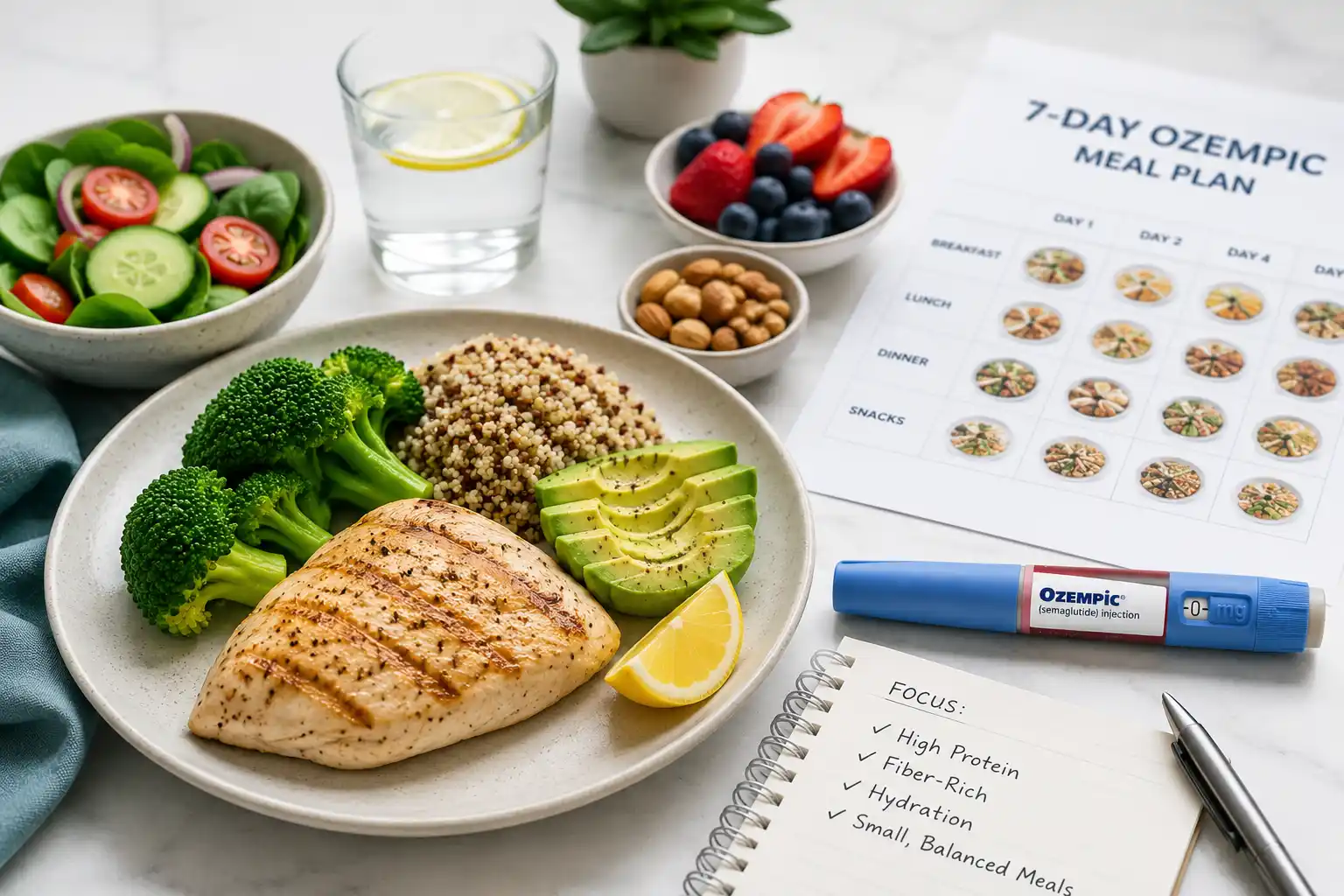
The result is a genuinely new health paradigm. The ‘Ozempic lifestyle’ is not just injecting a medication; it is smaller restaurant portions, a protein-first plate, a renewed emphasis on lifting weights to protect muscle, and a national conversation about what these drugs mean for our relationship with food. As with any medical decision, the right path is individual and belongs in a conversation with a qualified clinician — but the cultural shift is already, unmistakably, underway.
Sources
• Forbes Health — GLP-1 statistics: forbes.com/health/weight-loss/glp-1-statistics
• FoodNavigator-USA — how GLP-1s reshape food in 2026: foodnavigator-usa.com/Article/2025/12/15/soup-to-nuts-podcast-how-will-glp-1s-reshape-food-in-2026
• AJMC — GLP-1 therapies in 2026: ajmc.com/view/glp-1-therapies-in-2026-beyond-blood-sugar-and-the-scale • Medical Daily — GLP-1 muscle-loss concerns: medicaldaily.com/glp1-ozempic-muscle-loss-older-adults-risks-medicare-2026-476204
Leave a Reply